

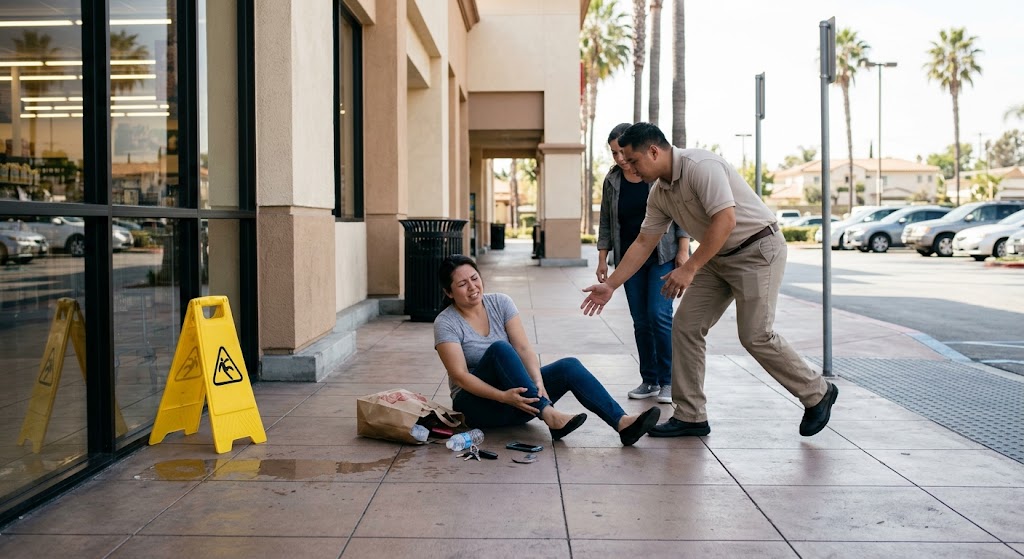
West Covina is a regional retail destination. Plaza West Covina, Eastland Center and The Heights pull shoppers from across the San Gabriel Valley, and the surrounding corridors are lined with grocery stores, big-box retail, restaurants and medical offices. Add a large stock of postwar apartment complexes, multi-level parking structures and the civic and hospital campuses, and the city generates a steady volume of serious falls.
A fall is not clumsiness. It is usually a wet floor nobody signed, a broken step nobody fixed, or a dark parking structure nobody relamped. Djougourian Law Corp represents people hurt in slip, trip and fall cases.
The Legal Standard in California
Property owners and occupiers owe everyone lawfully on the premises a duty of ordinary care to keep the property reasonably safe and to warn of dangers they know about or should discover. This flows from Civil Code Section 1714, as clarified by the California Supreme Court in Rowland v. Christian (1968) 69 Cal.2d 108, which replaced the old visitor categories with a general duty of reasonable care.
Proving a premises case requires five things:
- The defendant owned, leased, occupied or controlled the property
- A dangerous condition existed
- The defendant created it, knew about it, or should have discovered it through reasonable inspection
- The defendant failed to repair it or warn about it
- That failure caused the injury
Element three is where these cases are won and lost. Notice is proven through inspection and sweep logs, prior incident reports, maintenance records, work orders, employee testimony and surveillance footage. All of it sits in the defendant’s hands, and much of it is overwritten or discarded within 30 days.
Common Fall Hazards in West Covina
Wet floors in retail and grocery. Spills, mopping, produce misters, ice machines, drink stations and rain tracked in from large parking lots, often without cones or barriers. Big-box and grocery environments produce the highest volume of fall claims in the city.
Parking lots and structures. Potholes, wheel stops in walking paths, unmarked level changes, cracked asphalt, oil on ramps and burned-out lighting. The multi-level structures serving Plaza West Covina and the civic center are a recurring source.
Uneven sidewalks. Root heave from mature street trees across the older residential grid, plus utility cuts and grade changes. Where a public entity is responsible, the six-month claim deadline applies.
Defective stairs. Inconsistent riser heights, worn nosings, missing or loose handrails and inadequate lighting in apartment stairwells.
Apartment complex common areas. Walkways, laundry rooms, pool decks, carports and courtyard paving across the city’s postwar multifamily stock.
Restaurants. Greasy kitchen-adjacent floors, entry thresholds and restroom floors.
Torn carpet, curled mats and loose tile.
Obstructed walkways. Merchandise in aisles, restocking pallets and display fixtures.
Falls are a leading cause of injury-related emergency department visits, with especially severe consequences for older adults, as documented by the CDC.
High-Risk Fall Locations
- Plaza West Covina, Eastland Center and The Heights, including their parking structures and ring roads
- Grocery and big-box retail along Azusa Avenue, Vincent Avenue and Glendora Avenue
- Restaurants throughout the Azusa Avenue and Citrus Street corridors
- Apartment complexes across the city, particularly older multifamily stock
- Medical office buildings near Emanate Health Queen of the Valley Hospital on Sunset Avenue
- The civic center and parking structure on West Garvey Avenue
- Cortez Park, Galster Park, Shadow Oak Park and the West Covina Sportsplex
- Sidewalks along the older residential grid
Why These Cases Need a Lawyer Immediately
Evidence vanishes. The spill is mopped, the step is repaired and the video is overwritten. We send preservation letters within days.
The open and obvious defense. Defendants argue you should have seen it. California law recognizes limits on that argument, including where the condition was distracting, where avoidance was impractical, and where the owner should have anticipated harm despite the obviousness. In a busy retail aisle those limits matter.
Comparative fault pressure. Insurers assign fault to the injured person aggressively. Documented facts about lighting, signage and the condition itself are the answer.
Layered responsibility. The tenant operator, the property owner, the management company and a janitorial or maintenance contractor may each bear a share. Large retail centers almost always involve more than one defendant.
Causation disputes. Defendants attribute injuries to age or degenerative changes. Pre-incident records and medical experts establish what actually changed.
Premises Liability Results Reported by the Firm
- $500,000 settlement: slip-and-fall (premises liability) matter.
Past results do not guarantee, warrant or predict the outcome of your case. Outcomes depend on the facts, evidence, applicable law and circumstances of each matter.
Frequently Asked Questions
What should I do right after a fall?
Get medical attention. Report the incident to management and ask for a written incident report and a copy. Photograph the hazard itself, the surrounding area, the lighting and your footwear before anything is cleaned up. Get names and numbers of witnesses and employees present. Do not give a recorded statement or sign a release.
How long do I have?
Two years from the injury under Code of Civil Procedure Section 335.1. If the fall happened on public property, a written claim is generally due within six months under Government Code Section 911.2.
What if there was a wet floor sign?
A sign is evidence, not a shield. Placement, visibility, timing and whether the hazard should have existed at all remain in issue.
What if I was looking at my phone?
It may be raised as comparative fault. It does not end the claim, and it does not excuse a hazard the owner should have fixed.
Who is responsible in a leased retail space?
Often more than one party. The tenant, the property owner, the management company and a maintenance contractor may each bear a share, which is why identifying every defendant early matters.
What if I fell in my apartment complex?
Landlords owe tenants a duty to maintain common areas in reasonably safe condition, and California's implied warranty of habitability under Civil Code Section 1941 is relevant to habitability defects. Retaliation for reporting an injury or a defect is unlawful.
What compensation can I recover?
Medical expenses past and future, lost income, diminished earning capacity, pain and suffering, permanent impairment and scarring.
Contact a West Covina Slip and Fall Attorney
The longer you wait, the more evidence disappears. Call 818-530-0000 or contact us for a free consultation.
Citations and References
- U.S. Census Bureau, QuickFacts: West Covina city, California
- CDC, Falls Data and Research
- California Civil Code Section 1714
- California Civil Code Section 1941
- California Code of Civil Procedure Section 335.1
- California Government Code Section 911.2


