

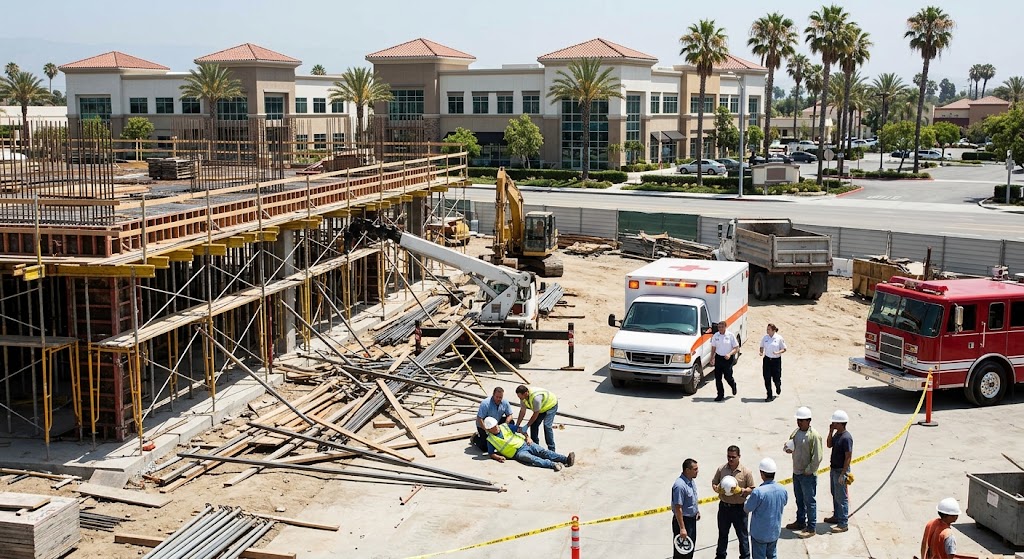
Construction in West Covina runs on several tracks at once. Caltrans and city work continues along the I-10 corridor and the arterials feeding it. Retail centers cycle through tenant improvements and redevelopment. Multifamily and infill housing goes up across the city. Warehouse and light industrial work continues throughout the surrounding San Gabriel Valley. Utility work runs under Azusa Avenue, Vincent Avenue and the older residential grid.
Construction pays well because it is dangerous. When a fall protection anchor was never installed, a trench was never shored, or a highway work zone had no proper traffic control, the injury that follows was preventable. Djougourian Law Corp represents injured construction workers throughout Los Angeles County.
Understanding Construction Injury Risk
Construction consistently records more fatal work injuries than any other private industry sector, according to the Bureau of Labor Statistics Census of Fatal Occupational Injuries. OSHA identifies the Focus Four hazards – falls, struck-by, caught-in or between, and electrocution – as responsible for the large majority of construction deaths.
Highway work zones deserve separate mention. FMCSA data shows large trucks are involved in a disproportionate share of work zone fatal crashes, and the I-10 corridor through West Covina carries exactly that traffic past exactly those workers.
In California, Cal/OSHA enforces the safety orders in Title 8 of the California Code of Regulations. Fall protection requirements for construction appear in Title 8 Section 1670. A Cal/OSHA citation following an incident is significant evidence in a civil case.
Workers’ Compensation Is Not the Whole Picture
This is the most important thing on this page.
Workers’ compensation is generally your exclusive remedy against your direct employer under Labor Code Section 3600. It pays medical treatment and partial wage replacement regardless of fault. It does not pay for pain and suffering, and it caps wage benefits well below actual earnings.
A third-party claim is different. On a typical West Covina project there is a general contractor, multiple subcontractors, a property owner, a developer, equipment lessors and product manufacturers. On a Caltrans or city project there is also a prime contractor and the public agency itself. If any of them other than your employer contributed to the injury, you can bring a negligence claim for full damages, including pain and suffering and complete wage loss. It runs alongside your workers’ compensation benefits, not instead of them.
Most injured workers are never told this. It is frequently the difference between a modest benefit stream and a recovery that actually covers a lifetime of consequences.
Common Construction Accidents in West Covina
Falls from height. Roofs, scaffolds, ladders, leading edges, unguarded floor openings and elevated platforms. Cal/OSHA requires fall protection above specified heights in construction.
Struck-by incidents. Falling tools and materials, swinging loads, and vehicles entering work zones. In freeway and arterial work zones, struck-by-vehicle is the dominant fatal mechanism.
Caught-in and between. Trench collapse during utility work, unguarded machinery, equipment pinch points, and workers crushed between a vehicle and a fixed object.
Electrocution. Contact with overhead lines, energized panels worked without lockout and tagout, defective tools and damaged cords. Older commercial buildings in tenant improvement work frequently have undocumented wiring.
Scaffold failure. Improper erection, missing planking or guardrails, overloading and inadequate inspection.
Crane and hoist incidents. Load drops, boom contact with power lines and improper rigging.
Trench and excavation collapse. Unshored or unsloped excavations fail without warning.
Heat illness. San Gabriel Valley summer temperatures regularly exceed those on the coastal side, and California has specific heat illness prevention requirements for outdoor work.
Where This Happens in West Covina
- I-10 and SR-60 corridor work zones
- Arterial and utility work on Azusa Avenue, Vincent Avenue, Sunset Avenue and Barranca Street
- Retail redevelopment and tenant improvement at Plaza West Covina, Eastland Center and The Heights
- Multifamily and infill residential construction across the city
- Warehouse and light industrial projects in the surrounding valley
- Civic, school and hospital campus projects
How We Build These Cases
Immediate scene preservation. Jobsites change daily. Photographs, equipment inspection and witness statements need to happen now.
Cal/OSHA records. We obtain the inspection file, citations, abatement documents and investigator notes.
Contract analysis. Prime contracts, subcontracts, site safety plans and indemnity provisions determine who controlled the work and who owed what duty.
Identifying every defendant. General contractor, subs, owner, developer, lessor, manufacturer, and on public works, the agency.
Public entity deadlines. On a Caltrans or city project, a claim against the agency is subject to the six-month written claim requirement under Government Code Section 911.2. This is the single most commonly missed deadline in construction cases.
Coordinating with the comp claim. The workers’ compensation carrier holds a lien on third-party recovery. Handling that lien well materially changes what reaches you.
Damages proof. Life care planning, vocational assessment and economic analysis for workers who cannot return to the trades.
Frequently Asked Questions
Can I sue my employer?
Generally no, because of workers’ compensation exclusivity under Labor Code Section 3600. Narrow exceptions exist. What you can do is pursue every other negligent party on the site.
Will a third-party claim affect my workers’ compensation?
No. They are separate proceedings. The carrier’s lien on any third-party recovery is addressed as part of the case.
What if I am undocumented?
California law protects injured workers regardless of immigration status. You have the right to workers’ compensation benefits and to bring a third-party claim.
What if I was paid in cash or classified as a contractor?
You may still be an employee as a matter of law regardless of how you were paid, and you may still have both a comp claim and a third-party claim. Do not assume you have no rights.
What if I was injured in a freeway work zone?
You likely have claims against the driver who struck you, their insurer, and potentially the prime contractor or agency responsible for the traffic control plan. The six-month public entity deadline applies to the agency claim.
How long do I have?
Third-party negligence claims are generally subject to the two-year limit in Code of Civil Procedure Section 335.1. Workers’ compensation has its own shorter reporting deadlines, and public entity claims run six months.
Contact a West Covina Construction Accident Attorney
If you were told workers’ compensation is all you get, get a second opinion before you accept that. Call 818-530-0000 or request a free case review.
Citations and References
- U.S. Census Bureau, QuickFacts: West Covina city, California
- Bureau of Labor Statistics, Census of Fatal Occupational Injuries
- OSHA, Construction Focus Four
- California Division of Occupational Safety and Health, Cal/OSHA
- Cal/OSHA Title 8 Section 1670, Personal Fall Arrest Systems
- FMCSA, Large Truck and Bus Crash Facts
- California Labor Code Section 3600
- California Government Code Section 911.2
- California Code of Civil Procedure Section 335.1


